
Results
Kick off meeting
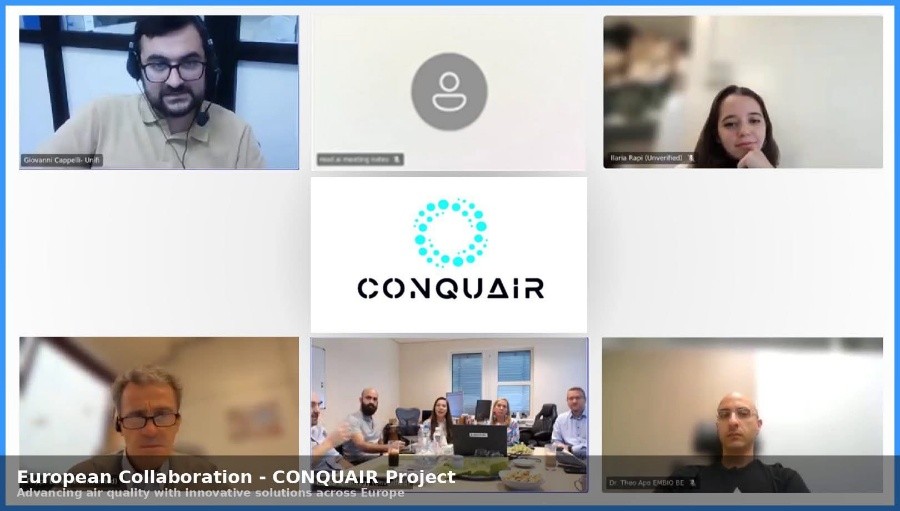
The CONQUAIR Kick-Off Meeting was successfully held on 17-18 September 2024 at the premises of Resysten in Törökbálint, Hungary. The two-day meeting brought together all project partners, providing an important opportunity to establish collaboration, align expectations, and initiate the path toward successful project implementation. During the meeting, partners introduced their expertise and roles within the project and engaged in in-depth discussions on the project’s objectives, key milestones, and planned activities. Particular focus was placed on defining the technical and operational roadmap, ensuring a coordinated approach to achieving the project’s goals. CONQUAIR represents an innovative approach to Indoor Air Quality (IAQ) management in healthcare environments. One of its cornerstone innovations is the ability to deliver continuous, real-time monitoring of air quality. By analysing critical microclimate parameters that may contribute to the spread of airborne pathogens, the system provides up-to-date, actionable data. These insights enable healthcare providers to significantly reduce the risk of harmful air conditions and protect both patients and healthcare personnel.
Beyond monitoring, CONQUAIR adopts a data-driven decision-support approach. The system is designed to assist healthcare facilities in maintaining optimal indoor environments by translating data into actionable insights. This empowers decision-makers to proactively manage IAQ, reduce the burden on healthcare workers, and improve patient outcomes, particularly in settings with vulnerable populations such as the elderly and immunocompromised.
Importantly, the project also emphasises evidence-based mitigation strategies. Based on monitored parameters and identified risks, CONQUAIR supports the implementation of targeted interventions such as:
- deployment of air purification systems to reduce airborne contaminants and bioaerosols,
- application of antimicrobial coatings to limit surface contamination and microbial persistence,
- optimisation of ventilation and environmental control strategies.
By integrating monitoring, analysis, and mitigation, CONQUAIR aims to establish a comprehensive framework for improving air quality and infection control in healthcare settings.
Deployment and Validation of CONQUAIR Technologies
Set up of airbeld™ in the hospitals

The beginning of 2025 has marked a successful milestone for the CONQUAIR project, with the deployment of the airbeld™ system across healthcare facilities in three countries: Cyprus, Hungary, and Italy. The airbeld™ system is an integrated IAQ monitoring solution, combining advanced sensing technologies with a proprietary algorithm. It enables healthcare facilities to obtain real-time insights into indoor pollutant levels and supports informed decision-making to maintain a healthy and comfortable environment. The system is designed to continuously monitor key air quality parameters, including carbon dioxide (CO₂), Volatile Organic Compounds (VOCs) and particulate matter fractions (PM₁, PM₂.₅, PM₄, and PM₁₀), which are critical indicators of ventilation efficiency and airborne contamination risks in clinical settings.
B.EL.D for Enterococcus detection on the surfaces in the hospitals
The B.E.L.D™ sensor was developed and validated for the detection of Enterococcus on hospital surfaces. The entire process was conducted and managed by EMBIO Diagnostics Ltd. B.E.L.D™ is based on the well-established BioElectric Recognition Assay (BERA), a cell-based biosensing technology. The system employs high-precision Analogue-to-Digital (A/D) converters to capture electrical signals generated by cells, which function as bio-identification elements. This approach enables advanced control, parallel measurements, wireless data transmission, and rapid testing. The device is capable of simultaneously monitoring real-time changes in the electrical properties of cells across up to eight channels, utilizing disposable carbon screen-printed electrodes. Additionally, it features Bluetooth 4.0 connectivity, allowing seamless integration with smartphones or Android devices and enabling immediate result notification for the end user. The test has been carefully designed for ease of use, requiring minimal equipment and limited user expertise. The total testing time is approximately three minutes, with results automatically uploaded to a cloud platform for storage and further analysis.
According to the obtained results, the newly developed biosensor demonstrated promising performance, achieving accuracy levels of up to 89%. Compared to conventional methods for detecting Enterococcus species, the proposed approach is faster, easier to implement, and does not require bulky or expensive laboratory equipment or highly specialised personnel.

Sampling with Kikkoman
During the project implementation, we have investigated the level of contamination of the surfaces in the hospitals, more particularly high-touch surfaces like door handles, medical equipment, side tables, hospital beds, etc. For this purpose, we have used Kikkoman Lumitesters. Kikkoman Lumitester is a rapid hygiene monitoring device used to assess surface cleanliness based on ATP (adenosine triphosphate) detection. ATP is present in all living cells, so its measurement serves as a proxy indicator of biological contamination (microbial and organic residues). Applying ATP detection it can provide a guideline on how cleaning and antimicrobial disinfection measures can be implemented in hospitals.
Formaldehyde: Sensor Technology and Strategic Placement
In alignment with the CONQUAIR technical framework described, CLASS srl has integrated its specialised absorption crystal sensing technology into the project for the continuous, real-time monitoring of formaldehyde (CH 2 O) vapours. This specific technology is based on an advanced patent originally developed by the French company ETHERA. Following ETHERA’s closure, CLASS srl successfully transferred the entire production technology to Italy, securing a dedicated agreement that allows the unrestricted, worldwide manufacture and utilisation of the patent. Since formaldehyde represents a major chemical hazard regulated by strict national and international occupational safety standards, the placement of the CLASS sensors was focused on high-risk hospital working environments where exposure risks are most critical. The instruments were deployed in targeted clinical and diagnostic departments, specifically:
Pathology and Histology Laboratories: Where formaldehyde is heavily utilised as
a routine tissue fixative.
Selected Operating Rooms and Vulnerable Patient Wards: To track cross-contamination and evaluate the direct impact of daily hospital operations on indoor air quality (IAQ).
The deployed devices operate with low computing power and optimised data transmission protocols, feeding real-time chemical concentration parameters directly into the integrated CONQUAIR framework via dedicated API protocols for cloud visualisation and threshold alerting. This continuous dataset allows for precise activity-based assessments, such as correlating chemical spikes with specific cleaning practices and disinfection cycles.
CONQUAIR platform
The CONQUAIR platform is designed to support healthcare facilities in the comprehensive monitoring and management of indoor air quality (IAQ) and environmental microbiological risks. It enables continuous assessment of indoor microclimate conditions, tracking of airborne pollutants and contamination levels, and supports evidence-based decision-making for targeted mitigation strategies.
The CONQUAIR platform offers the following key functionalities:
Air Quality Data Visualisation: CONQUAIR dashboard provides real-time measurements and historical trend analysis, enabling users to monitor key environmental parameters such as particulate matter (PM), CO₂ concentration, relative humidity, and temperature.
Customizable IAQ Alerts: Users can define threshold values for specific pollutants (e.g., particulate matter, CO₂, Volatile Organic Compounds (VOCs), and humidity) for each hospital unit, triggering automated alerts when predefined limits are exceeded.
Surface Swab Results Management: Integrated visualisation tools (charts, logs, and contamination tracking) allow longitudinal analysis of microbiological surface sampling results, supporting the identification of contamination trends.
Surface Coating Registry: Centralised documentation of applied antimicrobial surface coatings within healthcare facilities, enabling traceability and evaluation of their effectiveness over time.
Correlation and Advanced Analytics: Analytical tools enable cross-correlation of datasets, including:
- IAQ events and surface contamination results,
- Environmental conditions and contamination spikes,
- Implemented mitigation actions and observed outcome improvements.
Incident Reporting: Automated logging and notification of IAQ exceedances and surface contamination events, ensuring traceability and timely response.
AI-Based Advisory Assistant: An integrated AI assistant provides decision support by recommending appropriate mitigation measures based on detected environmental and contamination patterns.
RESYSTEN coating
(September 2025)
Resysten Hungary Kft. provided its services as a mitigation solution to the CONQUAIR project as part of the consortium. The company develops and applies durable antimicrobial and air-purifying coatings designed to improve hygiene and air quality. This technology is already successfully implemented across multiple sectors, including healthcare, food industry, public transport, community spaces, workplaces, manufacturing facilities, and sports environments.
Resysten coatings offer several key advantages:
- Provides a high level of hygiene, reducing the risk of cross-contamination and the likelihood of outbreaks: treated surfaces show 85–93% less biological contamination.
- Forms a durable protective layer on which pathogens cannot settle (lasts up to 12 months). It also breaks down proteins and prevents biofilm formation.
- Delivers air-purifying effects, improves air quality, and neutralises odours.
- Significantly reduces VOC emissions as well as NH₃, N₂O, and CO₂ levels.
- Applicable on almost any surface (painted walls, wood, metal, plastic, textiles, glass) without altering the appearance or material properties of the treated surface.
Resysten Protective Coating (RPC) is one of Resysten’s first products. It remains active under light exposure, continuously breaking down airborne and surface-level contaminants through a sustained photocatalytic reaction*. This transforms treated surfaces from passive materials into functional, self-cleaning systems against bacteria, mould, and microorganisms.
Resysten Clean Air is a TiO₂-based coating that works similarly to RPC and supports long-term improvements in air quality and hygiene while contributing to more sustainable operation of indoor and outdoor surfaces in high-traffic environments.
Resysten Ultra is another advanced surface-protection technology that can operate independently of sunlight, ensuring consistent performance even in low-light or fully indoor environments. Its quaternary ammonium-based active compound delivers durable and reliable hygienic protection on high-touch surfaces.
Resysten technologies are particularly beneficial in environments where air quality and hygiene are critical, including urban areas, transportation hubs, offices, healthcare facilities, schools, and hotels. They help create cleaner indoor and outdoor spaces.
*Photocatalysis is a process in which a material called a photocatalyst (e.g., TiO₂) absorbs light and generates electrons and positively charged holes. These charge carriers react with water and oxygen molecules adsorbed on the photocatalyst surface to produce highly reactive species, such as hydroxyl radicals and superoxide species. These reactive compounds help break down pollutants and microorganisms and can transform certain chemicals into less harmful substances. The photocatalyst itself is not consumed during the process and can continue to function over multiple cycles.
Air purifiers
We have deployed 10 air purifiers across pilot hospitals. Air purifiers act as a supplementary engineering control, enhancing effective air exchange and reducing airborne contaminant concentrations, particularly in settings where existing ventilation systems are insufficient or operationally constrained. Air purifiers do not replace mechanical ventilation, as they do not provide a fresh air supply or control CO₂, humidity, or pressure differentials. Their effectiveness is dependent on proper sizing, placement, and room airflow dynamics, and they do not address contamination sources or surface reservoirs. However, air purifiers can help with the reduction in airborne particulate matter and bioaerosol concentration (including bacteria and fungal spores), leading to decreased microbial load (CFU/m³) and lower risk of airborne transmission. Improvement of effective air cleaning rate (eACH), particularly in spaces with insufficient mechanical ventilation.
Congresses, Events and Dissemination Activities
The CEM Middle-East Conference and Exhibition on Emissions and Air Quality Monitoring
(April 2025, Manama)
EMBIO Diagnostics participated in the CEM Middle-East Conference and Exhibition on Emissions and Air Quality, where the company contributed to discussions on advanced approaches for monitoring and improving air quality in complex environments. During the event, EMBIO Diagnostics presented the Conquair project, highlighting its objectives, technological framework, and potential applications for enhanced detection and surveillance of airborne contaminants, as well as air quality monitoring and mitigation strategies for critical indoor environments, including hospitals, where environmental conditions are directly linked to infection control and patient safety. The conference provided an opportunity to engage with international stakeholders, exchange knowledge on emission reduction strategies, and showcase innovative diagnostic solutions aligned with current environmental and public health priorities.
CONQUAIR at QE Air – Quality & Emission Expo
(September 2025, Birmingham)

The CONQUAIR project was successfully presented at the Air Quality & Emissions Expo 2025, held on 17-18 September at the NEC Birmingham (UK). The event brought together a multidisciplinary community of experts, including environmental engineers, policymakers, technology providers, and healthcare stakeholders, fostering knowledge exchange and collaboration on innovative solutions for cleaner and safer indoor and outdoor environments. Participation in this high-level forum enabled CONQUAIR to showcase its integrated approach to indoor air quality monitoring and microbiological risk assessment, while engaging with key stakeholders to promote the adoption of advanced tools for improving environmental health and infection prevention in healthcare settings.
CONQUAIR at InnoHealth Forum
(September 2025, Larissa)
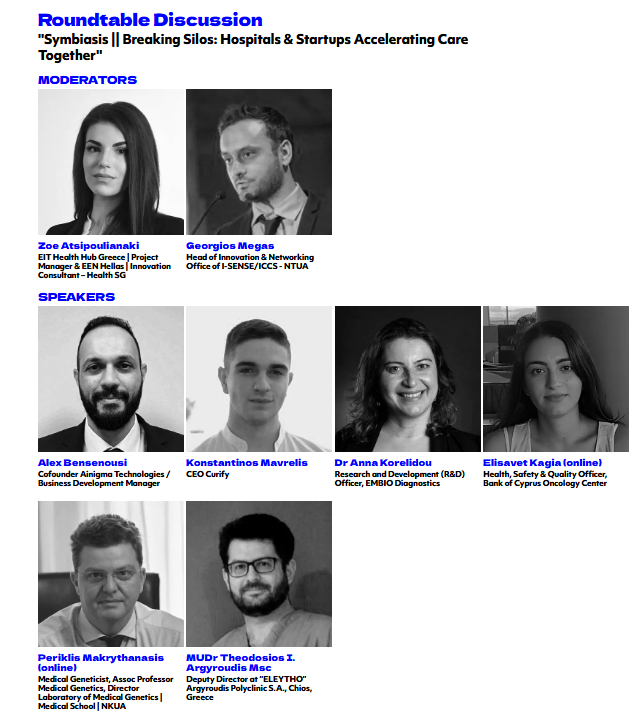
EMBIO Diagnostics Ltd. was invited to participate in the 3rd InnoHealth Forum, held in Larissa, Greece, in September 2025. The company attended alongside a representative from the Bank of Cyprus Oncology Center (BOCOC). During the forum, they contributed to a roundtable discussion focused on how hospitals and startups can collaborate to accelerate innovation in healthcare. The CONQUAIR project was presented as a representative example supporting this objective.
Stakeholders presentation
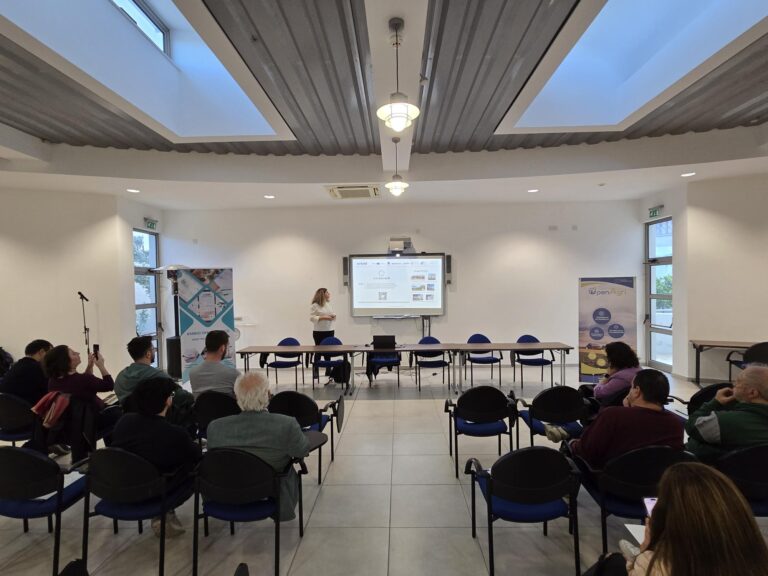
EMBIO Diagnostics had presented CONQUAIR project to the stakeholders from Cyprus
Florentine Days of Occupational Medicine and Radioprotection
(July 2025, Florence, Italy)
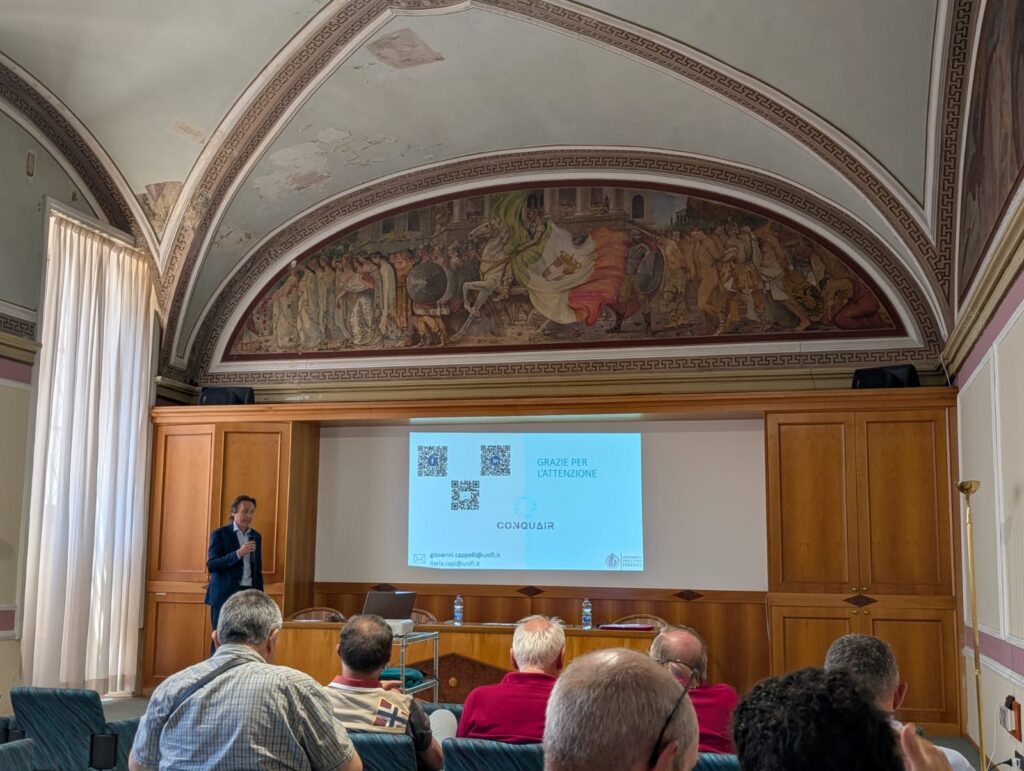
The research group of the University of Florence presented the CONQUAIR project during the Florentine Days of Occupational Medicine and Radioprotection, an event dedicated to current challenges and innovations in occupational health and environmental safety.
The oral presentation, entitled “Indoor Air Quality monitoring in hospital environments to reduce Healthcare-Associated Infections (HAIs): the multicenter European CONQUAir study (Cyprus, Italy, Hungary)” focused on the role of advanced IAQ monitoring strategies in supporting infection prevention and improving environmental conditions within healthcare facilities. The presentation outlined the multicenter European collaboration underlying the CONQUAir project and discussed its technological and scientific approach for the detection and management of airborne contaminants in critical indoor environments. The event enabled interaction with researchers and healthcare professionals working in occupational medicine, radioprotection, and hospital safety, fostering scientific exchange on innovative approaches for protecting both healthcare workers and patients.
87th National Congress of Occupational Medicine
Italian Society of Occupational Medicine (SIML) (October 2025, Bologna, Italy)
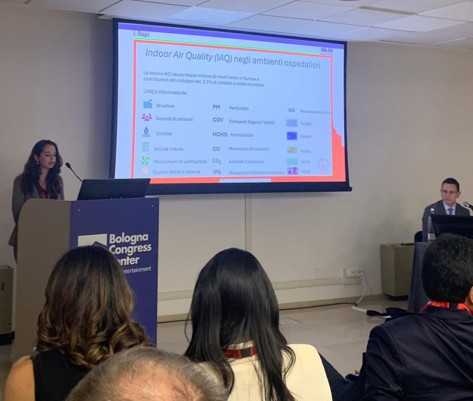
The research group of the University of Florence participated in the 87th National Congress of Occupational Medicine, organised by the Italian Society of Occupational Medicine (SIML), focused on advanced studies for the protection and promotion of health and safety in occupational settings. During the congress, the group presented the CONQUAIR project through an oral presentation entitled “Innovative real-time monitoring and management approach for air quality in hospital working environments.” The presentation highlighted the project’s integrated strategy for continuous Indoor Air Quality (IAQ) monitoring in healthcare facilities, emphasising the use of advanced sensing technologies and real-time data management systems to support occupational health, environmental safety, and infection prevention in hospital environments. The congress also provided an opportunity to exchange scientific expertise with national specialists in occupational medicine and discuss emerging technological solutions for healthier and safer workplaces.
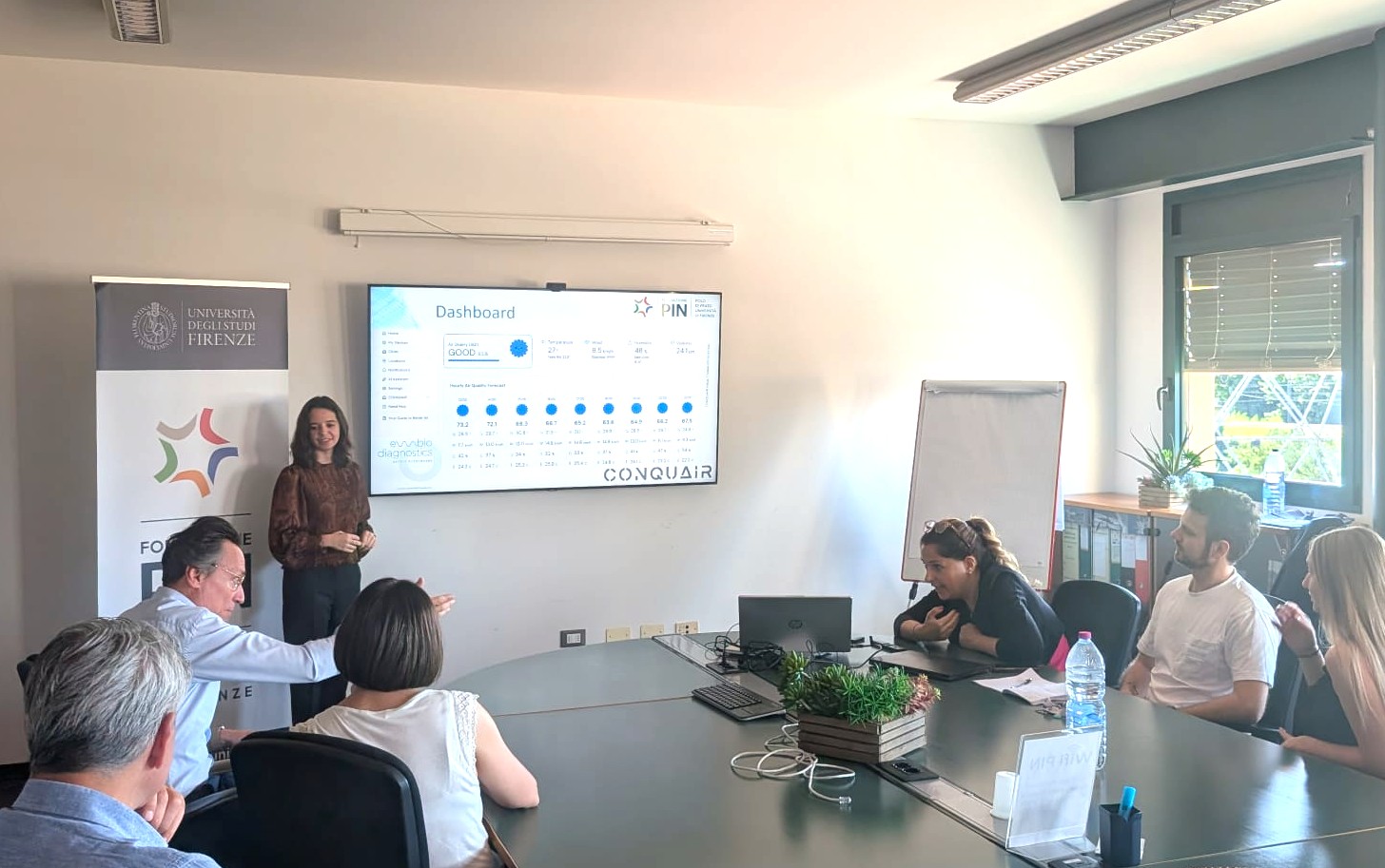
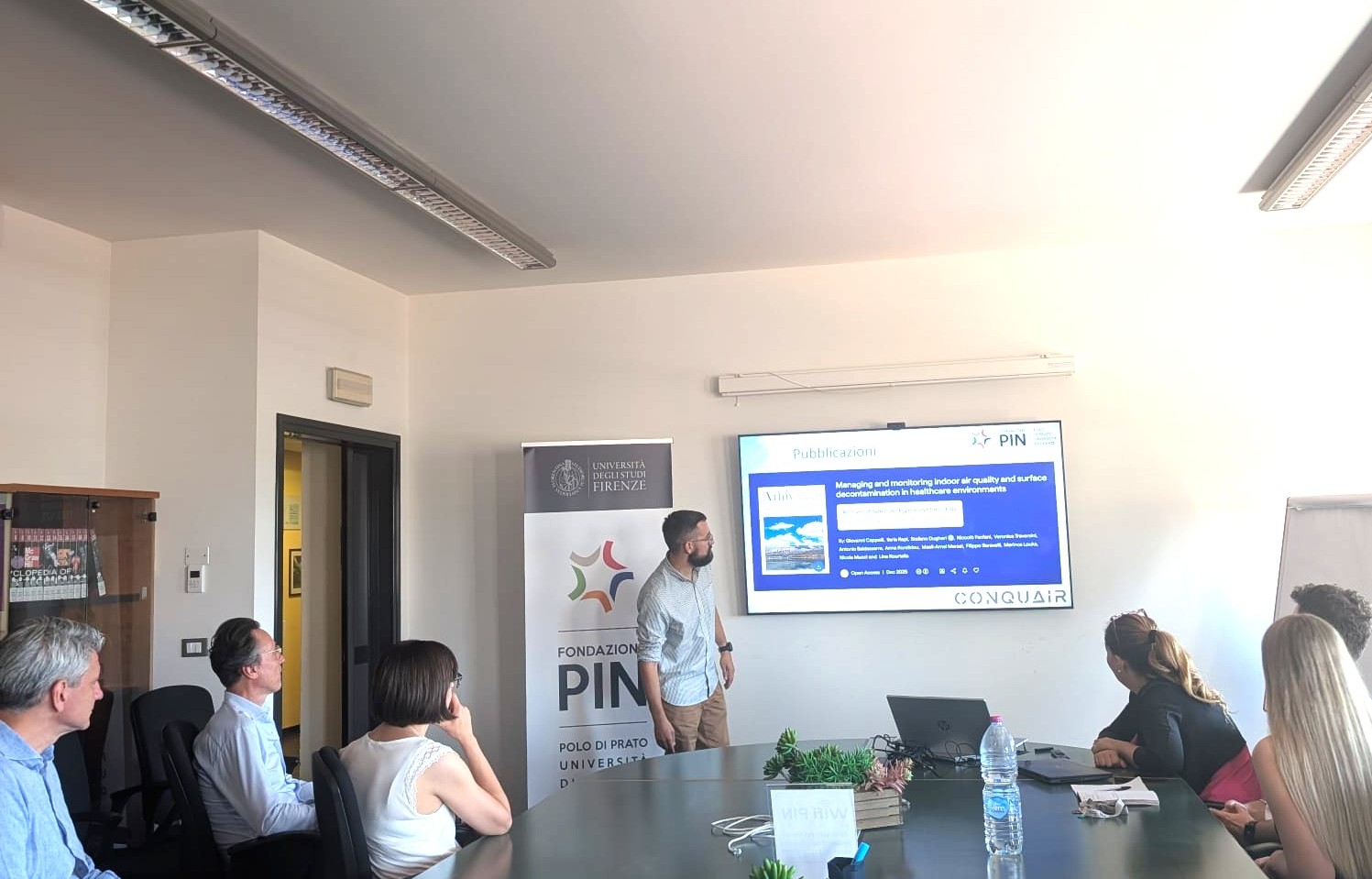
The University of Florence research group presented the CONQUAIR project to staff from the medical and hospital sector and those involved in workplace health and safety. The event took place during a morning session organised specifically for the project, entitled: CONQUAIR: an innovative solution for air quality control. The oral presentations, entitled “Indoor Air Quality in the Healthcare Sector” (Dr Giovanni Cappelli) and “The CONQUAir Project: Results and Applications in the Hospital Setting” (Dr Ilaria Rapi), generated considerable interest in the project, the results achieved to date and possible future applications. The session took place in a meeting room at the PIN-Polo Foundation in Prato, part of the University of Florence.
Publication of the review in Arh Hig Rada Toksikol
76(4):222–241. doi: 10.2478/aiht-2025-76-4013
Link: https://pubmed.ncbi.nlm.nih.gov/41491979/
The working group comprising EMBIO, Class, Resysten and UNIFI has written a scientific review on the technologies used in the medical sector to improve air quality in hospital environments and on possible mitigation techniques. The title of the paper is:Managing and monitoring indoor air quality and surface decontamination in healthcare environments. Giovanni Cappelli, Ilaria Rapi, Stefano Dugheri, Niccolò Fanfani, Veronica Traversini, Antonio Baldassarre, Anna Korelidou, Maali-Amel Mersel, Filippo Baravelli, Marinos Louka, Nicola Mucci, Lina Kourtella.
Abstract: Indoor air quality (IAQ) in healthcare facilities is a critical yet often underestimated factor associated with adverse health effects and increased risk of infectious outbreaks. Key pollutants include volatile organic compounds (VOCs), particulate matter, and various biological agents such as bacteria and viruses. While numerous variables contribute to IAQ, European regulations still have significant gaps, having historically focused more on individual substances than on the overall air environment. This review examines the most relevant IAQ parameters, current technologies available for their detection, and the regulatory landscape at the European level. Special attention is given to real-time monitoring systems. We also propose a concise operational guideline for IAQ management, which combines continuous monitoring, evidence-based mitigation, and improvements to reduce exposure, increase resilience to airborne and surface threats, and produce measurable safety outcomes for patients and healthcare personnel within hospital settings.